
Pillar 02 of 7 · Cold and heat
Cold plunge, sauna and contrast: a practical guide
I have spent years in rivers, lakes, tubs and saunas with groups of every kind. Cold and heat are honest teachers. They ask you to stay calm while your body is shouting, and that skill travels well beyond the water.
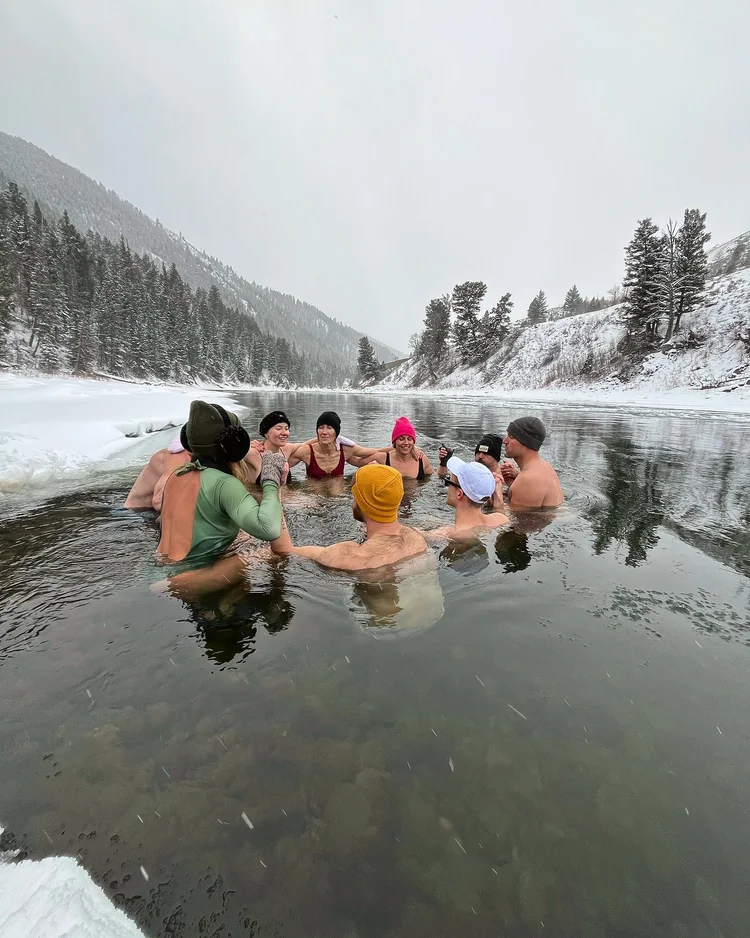
The short answer. Deliberate cold and heat are forms of hormetic stress: short, controlled challenges your body adapts to. Research suggests they may support mood, alertness and recovery, and regular sauna use is associated with better long-term health in observational studies. Start small, never plunge alone, and let your breath set the pace.
Why cold and heat belong together
Cold and heat are the second of the seven fundamentals of longevity I teach. I pair them because they train the same capacity from opposite directions: the ability to meet a strong sensation, keep your breathing steady, and choose your response. I also collaborate with WHOOP and UCLA Sports Medicine on cold-water immersion research, because I want what I teach to keep meeting the evidence.
Cold: what happens in the first minute
Sudden immersion in cold water triggers the cold shock response: a gasp, fast breathing and a jump in heart rate that peaks in the first minute. This response is the main reason cold water can be dangerous, and research suggests it lessens with repeated, short immersions (Tipton 2017). That is exactly why I teach the breath before I teach the plunge.
What the research suggests
Reviews describe a wide range of possible effects of voluntary cold water exposure and are clear that the evidence is still debated (Espeland 2022). In a randomized trial of more than 3,000 adults, people who ended their daily shower with 30 to 90 seconds of cold reported fewer sickness absence days from work (Buijze 2016). A brain imaging study found that a five-minute head-out immersion was followed by higher positive affect and changes in brain network connectivity (Yankouskaya 2023). For athletes, a meta-analysis suggests water around 11 to 15 °C for 11 to 15 minutes may help with muscle soreness after exercise (Machado 2016).
Please practice safely. This is education, not medical advice. Never practice breath holds or breathing exercises in or near water, while driving, or anywhere fainting could hurt you. Cold water carries real risk: never plunge alone, and speak with your doctor first if you are pregnant or have a heart condition, high blood pressure, epilepsy, Raynaud's or any other medical condition.
Heat: what the sauna research shows
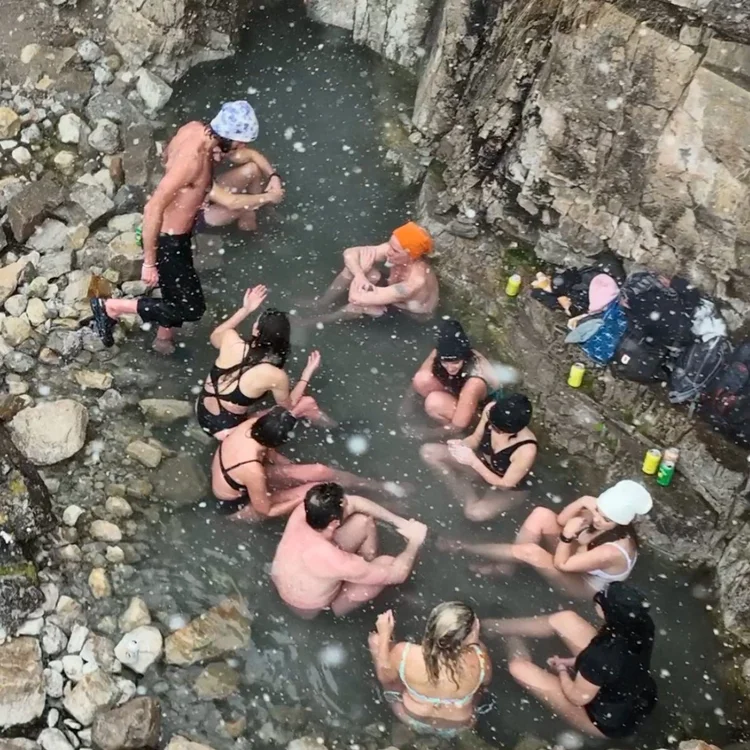
The most cited sauna research comes from Finland. In a 20-year study of more than 2,000 middle-aged men, those who used a sauna four to seven times a week had lower rates of fatal cardiovascular events and all-cause death than those who went once a week (Laukkanen 2015). It is observational, so it shows association, not cause. A systematic review of regular dry sauna bathing reached similar, cautious conclusions (Hussain 2018).
Contrast: putting them together
Søberg and colleagues studied young men who swam in winter water and used the sauna several times a week. Compared with controls, they showed different brown fat thermoregulation and more heat production in the cold. They averaged about 11 minutes of cold and 57 minutes of sauna per week in total (Søberg 2021). It is a small study, and it is still the best practical anchor I know for dose.
How I would begin
- Breathe first. Two minutes of slow nasal breathing on land with long exhales. No breath holds, ever, in or near water.
- Short cold. 30 seconds to two minutes in cool to cold water, exhaling slowly as you enter. Read my cold plunge breathing guide first.
- Comfortable heat. 10 to 15 minutes in the sauna, sitting lower if you feel faint.
- Repeat two or three times, then rewarm gently with movement, layers and a warm drink.
- Build slowly over weeks, not days. Two or three sessions a week is plenty to start.
Go deeper
Cold practice starts with breath, so begin with my breathwork guide and the physiological sigh. The library has longer talks and guided sessions. If you would like to practice in person, my April 2027 program at Kripalu includes daily optional group cold-water immersion, and Programs lists everything else.
Questions people ask me
Is a cold plunge good for you?
Research suggests regular, voluntary cold water immersion may support mood, alertness and a sense of resilience, but the evidence is still mixed and much of it comes from small studies. Cold water also carries real risk, especially for the heart, so I approach it carefully and progressively.
How cold should a cold plunge be?
Cold enough to feel a clear challenge while you can still breathe slowly. For many beginners that is roughly 10 to 15 °C (50 to 59 °F). Colder is not automatically better. Your breath is the guide: if you cannot slow your exhale, the water is too cold or the dose is too long for today.
How long should I stay in a cold plunge?
I suggest starting with 30 seconds to two minutes and building gradually. In one study of experienced winter swimmers, the group averaged about 11 minutes of cold per week in total, split across several short dips.
Should I do the sauna or the cold plunge first?
Both orders are common. Many people enjoy alternating heat and cold and finishing on cold, which is what the winter swimmers in Søberg's study tended to do. If you feel lightheaded, finish warm, sit down and rehydrate.
Is sauna bathing safe?
For most healthy adults a traditional sauna at a comfortable temperature is well tolerated. Avoid alcohol, hydrate, keep early sessions short and speak with your doctor first if you have a heart condition, low or high blood pressure, or are pregnant.
Meet the cold with a calm breath
Start with the free 10-minute guided session, then take it into the water.
References
- Tipton et al. (2017). Cold water immersion: kill or cure?. Experimental Physiology. doi.org/10.1113/EP086283
- Espeland et al. (2022). Health effects of voluntary exposure to cold water: a continuing subject of debate. International Journal of Circumpolar Health. doi.org/10.1080/22423982.2022.2111789
- Søberg et al. (2021). Altered brown fat thermoregulation and enhanced cold-induced thermogenesis in young, healthy, winter-swimming men. Cell Reports Medicine. doi.org/10.1016/j.xcrm.2021.100408
- Laukkanen et al. (2015). Association Between Sauna Bathing and Fatal Cardiovascular and All-Cause Mortality Events. JAMA Internal Medicine. doi.org/10.1001/jamainternmed.2014.8187
- Hussain et al. (2018). Clinical Effects of Regular Dry Sauna Bathing: A Systematic Review. Evidence-Based Complementary and Alternative Medicine. doi.org/10.1155/2018/1857413
- Buijze et al. (2016). The Effect of Cold Showering on Health and Work: A Randomized Controlled Trial. PLOS ONE. doi.org/10.1371/journal.pone.0161749
- Yankouskaya et al. (2023). Short-Term Head-Out Whole-Body Cold-Water Immersion Facilitates Positive Affect and Increases Interaction between Large-Scale Brain Networks. Biology. doi.org/10.3390/biology12020211
- Machado et al. (2016). Can Water Temperature and Immersion Time Influence the Effect of Cold Water Immersion on Muscle Soreness? A Systematic Review and Meta-Analysis. Sports Medicine. doi.org/10.1007/s40279-015-0431-7