
Pillar 01 of 7 · Breath
Breathwork: the science and practice of conscious breathing
Breath is where I begin with everyone. It is free, it goes everywhere with you, and it is the most direct way I know to change how you feel in the next sixty seconds.

The short answer. Breathwork means changing your breathing on purpose. Slow breathing with long exhales tends to calm the body. Faster patterns tend to energize it. Research suggests a few minutes a day may support lower stress and better mood, and the skill grows with practice.
Why I start with breath
I trained and certified as a Wim Hof Method instructor in 2017, and since then I have guided breathing in conference stages, team facilities, river banks and the main hall at Kripalu. The pattern is always the same. When people learn to steer their breath, they discover they have more say over their state than they thought.
Breathing is unusual. Your brainstem runs it automatically, yet you can take the controls at any moment. That two-way door is why breath is the first of the seven fundamentals of longevity I teach, and why the other six (cold and heat, sleep, movement, nourishment, mindset and community) all go better when your breathing is calm and efficient.
What the research suggests
Slow breathing and the heart
Breathing at around six breaths per minute tends to amplify the natural rise and fall of heart rate with each breath, often described as heart rate variability. Reviews of slow breathing in healthy adults link it with greater parasympathetic activity, more relaxation and less anxiety (Zaccaro 2018; Russo 2017).
Daily practice and mood
In a one-month randomized study from Stanford, five minutes a day of cyclic sighing, a pattern built around long exhales, was linked with improved mood and a lower resting breathing rate, with larger daily mood gains than an equal dose of mindfulness meditation (Balban 2023). A 2023 meta-analysis of randomized trials found that breathwork was associated with lower self-reported stress, with small to moderate effects (Fincham 2023).
Activating breath and the stress response
Faster breathing with breath holds is a different tool. In one well known study, people trained in breathing, cold exposure and meditation were able to voluntarily activate their sympathetic nervous system and showed a smaller inflammatory response to a lab challenge (Kox 2014). It is fascinating work, it was a small study, and it is a reason to explore, not a promise.
Three practices to begin with
The physiological sigh
Two inhales through the nose, one long exhale through the mouth. My fastest reset in a stressful moment.
Learn the sighBreathing for regulation
Slow, long exhales to downshift, gentle activation to upshift, and a five-minute daily routine.
Read the guideBreathing in a cold plunge
How I teach people to meet the cold shock with a long, slow exhale instead of a gasp.
Read the guidePractice with me now

10 minute morning breathwork for energy
My Breath Workout of the Day. Long candle-flicker exhales, bellows breath with cat and cow, and 100 exhale pulsations to wake up your breathing muscles. Sit down, press play and start your day.
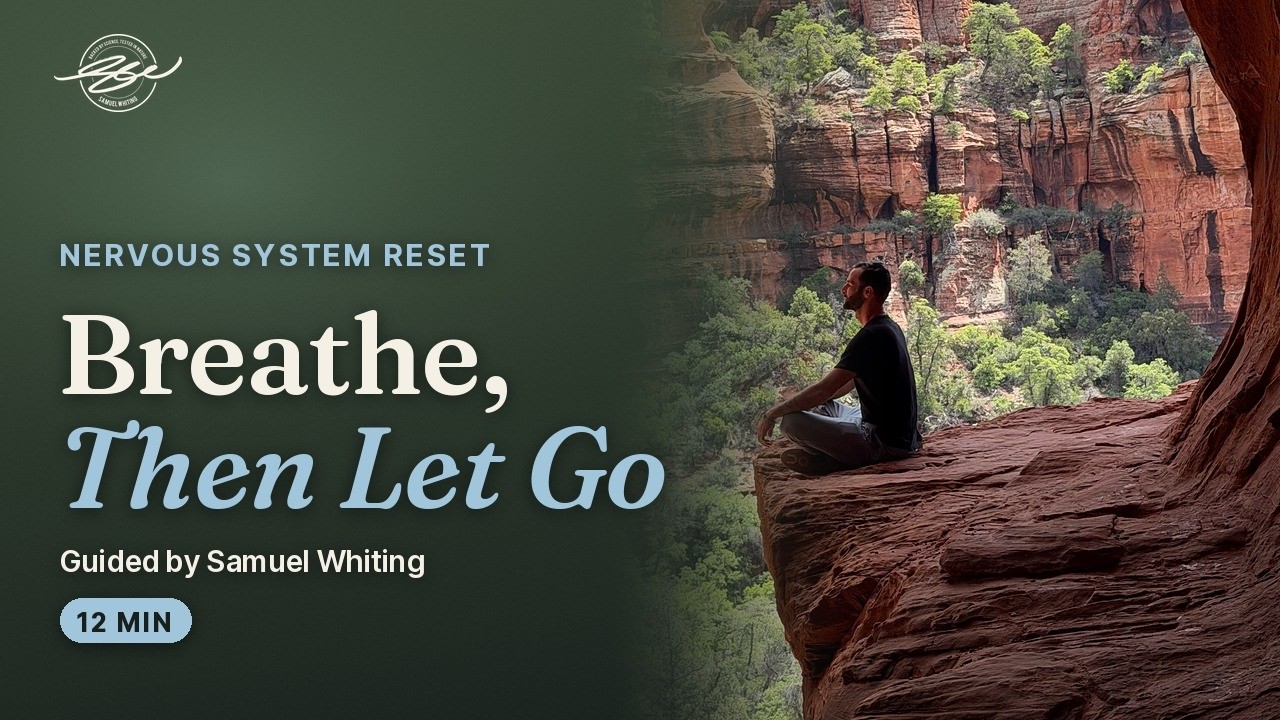
Nervous system reset breathwork
Five minutes of two-part power breathing lying down, then a deep rest where you let go of conscious breathing and settle. A good one for the end of a long day.
Step-by-step guides: how to reset your nervous system and how to calm your nervous system, fast and before bed. More sessions in the library.
Learn with me
The free Starter is a 10-minute guided session plus a seven-day guide, and it is the easiest way in. If you want to go deeper, my library holds long conversations with Dr. Andrew Huberman and James Nestor about the science of breathing, each with a guided session. In April 2027 I am teaching The Fundamentals of Longevity at Kripalu, and you can see everything else I offer on Programs.
Breath pairs naturally with temperature. When you are ready, my guide to cold and heat shows how the same exhale carries you into a cold plunge.
Please practice safely. This is education, not medical advice. Never practice breath holds or breathing exercises in or near water, while driving, or anywhere fainting could hurt you. Cold water carries real risk: never plunge alone, and speak with your doctor first if you are pregnant or have a heart condition, high blood pressure, epilepsy, Raynaud's or any other medical condition.
Questions people ask me
What is breathwork?
Breathwork is any practice where you change the pace, depth or pattern of your breathing on purpose. It ranges from slow, quiet breathing at about six breaths a minute to faster, more activating patterns. Because breathing is both automatic and voluntary, it is one of the few levers we have for consciously shifting our own state.
Is breathwork backed by science?
Research suggests that some breathing practices may support lower self-reported stress and better mood. A 2023 meta-analysis of randomized trials found an overall reduction in self-reported stress, with modest effects and wide variation between studies, so I approach breathwork as a skill to practice, not a cure.
What is the best breathing technique for beginners?
I start most people with slow nasal breathing and a longer exhale, for example a gentle inhale for four counts and an exhale for six. It is simple, quiet and hard to overdo. The physiological sigh is a great second tool for moments of stress.
How long should I practice breathwork each day?
Five minutes a day is a meaningful start. In a one-month study, five minutes of daily cyclic sighing was linked with better mood and a lower resting breathing rate. Consistency matters more than intensity.
Is breathwork safe?
Gentle, slow breathing is low risk for most people. Faster patterns and breath holds can cause tingling, lightheadedness or fainting, so practice them seated or lying down, never in or near water or while driving, and check with your doctor if you are pregnant or have a heart condition, high blood pressure or epilepsy.
Start with ten minutes
A free guided breathing session and a seven-day guide, delivered by email.
References
- Balban et al. (2023). Brief structured respiration practices enhance mood and reduce physiological arousal. Cell Reports Medicine. doi.org/10.1016/j.xcrm.2022.100895
- Fincham et al. (2023). Effect of breathwork on stress and mental health: A meta-analysis of randomised-controlled trials. Scientific Reports. doi.org/10.1038/s41598-022-27247-y
- Zaccaro et al. (2018). How Breath-Control Can Change Your Life: A Systematic Review on Psycho-Physiological Correlates of Slow Breathing. Frontiers in Human Neuroscience. doi.org/10.3389/fnhum.2018.00353
- Russo et al. (2017). The physiological effects of slow breathing in the healthy human. Breathe. doi.org/10.1183/20734735.009817
- Li et al. (2016). The peptidergic control circuit for sighing. Nature. doi.org/10.1038/nature16964
- Kox et al. (2014). Voluntary activation of the sympathetic nervous system and attenuation of the innate immune response in humans. Proceedings of the National Academy of Sciences. doi.org/10.1073/pnas.1322174111