
Principles
The seven fundamentals of longevity
Facts not opinions, truths not trends. Breath, cold and heat, sleep, movement, nourishment, mindset and community: the principles behind everything I teach, with the science.
My mission
There is no one size fits all approach to health and wellness.
My mission is to explore ‘facts not opinions, truths not trends’ and uncover biological principles, mechanisms and pathways which can directly link to actionable practices that support general health, well being and an empowered lifestyle design.
These seven fundamentals are where that work lands. Each one is simple on its own. Practiced together, they become one practice.
Breath
The one vital function you can steer on purpose
Breathing is modulated by almost every action, behavior or state, e.g. exercise, posture, sleep-wake cycle, startle, anxiety, panic, vigilance, calm, and focus. In order to accomplish this, breathing must be an exceptionally robust and highly labile autonomic behavior, an incredible challenge well met by evolution.1 Research suggests slow, paced breathing may support a calmer state, reflected in higher heart rate variability,2,3 and in a Stanford study, five minutes a day of exhale-focused breathing improved mood more than the same time spent in mindfulness meditation.4

Cold and heat
Deliberate cold and sauna as training for calm under stress
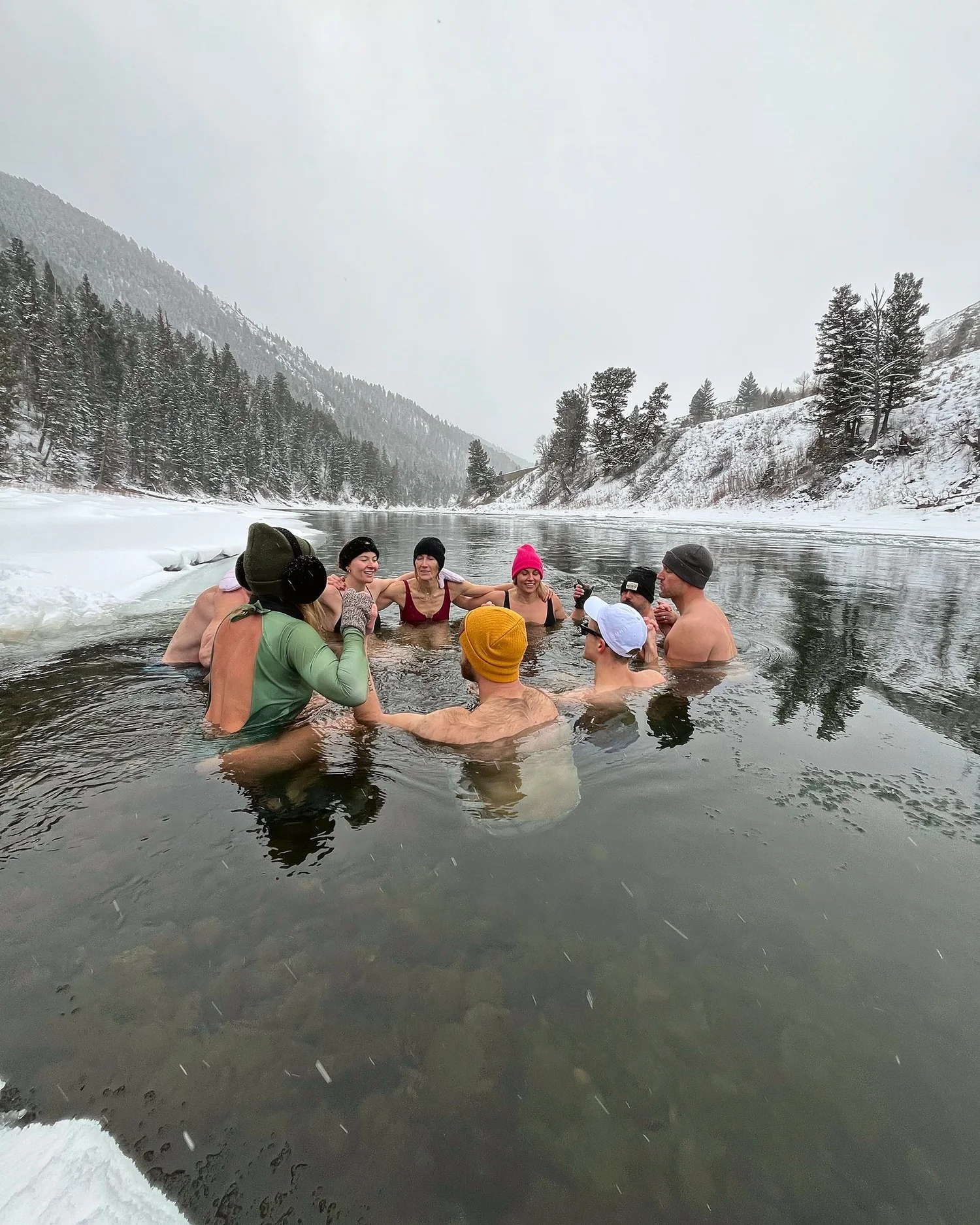
Cold exposure is the deliberate practice of short term cooling of your body. Research suggests cold water immersion can sharply raise blood levels of noradrenaline and dopamine,5 and regular practice is associated with more active brown fat and greater comfort in the cold.6 A 2025 meta-analysis linked cold water immersion with lower stress 12 hours later, with better sleep quality reported in some studies, though the evidence is still early.7,8 In my experience, it also brings a sense of purpose, creativity and well being.
Heat is the other half of the practice. In a 20 year study of more than 2,300 Finnish men, using the sauna four to seven times a week was associated with a lower risk of death from any cause than going once a week.9 A later review suggests regular sauna bathing may support blood vessel function and healthy blood pressure, though most of the evidence is observational.10 I use the two as a pair: cold to wake the system up, heat to let it soften.

Sleep and recovery
Rhythm, rest and the art of downshifting
Sleep is where the work of the day gets put to use. The American Academy of Sleep Medicine and the Sleep Research Society recommend that adults sleep seven or more hours a night on a regular basis.11 Your body runs on a 24 hour clock set largely by light, and research suggests that bright days and darker evenings may support steadier sleep and mood.12 Recovery is a skill. Get morning light in nature, slow your breath at night, dim the screens early, and let your body do the rest.

Movement
Move often, play hard, stay capable
Your body is built to move. A 2022 meta-analysis of 15 studies and more than 47,000 adults found that more daily steps were associated with a lower risk of death from any cause, with the benefit leveling off around 6,000 to 8,000 steps a day for adults over 60 and 8,000 to 10,000 for younger adults.13 Strength matters too. About 30 to 60 minutes a week of muscle strengthening work was associated with roughly 10 to 20 percent lower all-cause mortality.14 Walk, lift, stretch, climb, swim and play. Keep it varied and keep it fun, so you stay capable for life.

Nourishment
Simple, real food, cooked and shared
Food is information for your body, and the simpler it is, the clearer the message. In a tightly controlled NIH study, people ate about 500 more calories a day on an ultra-processed diet than on an unprocessed one, even though the meals offered were matched for sugar, fat, fiber and salt.15 A large umbrella review found that eating in a Mediterranean style is associated with better long term health.16 Cook more, eat real food, and share the table when you can.
Go deeper
- JournalRead the Journal

Mindset
Understand your nervous system, and you can shift your state
The nervous system is an information processing superhighway which connects us to our inner and outer worlds by way of sensation, perception, thinking, emotions and actions or behavior. When we understand its fundamental principles, we can build the awareness to shift our state of being. In one well-known study, people trained for 10 days in breathing, cold and meditation practices were able to voluntarily activate their sympathetic nervous system, long thought to be beyond conscious control.17
How you see stress matters too. Research from Yale suggests stress mindset can be shifted, and seeing stress as enhancing rather than debilitating was associated with a more moderate cortisol response and a greater openness to feedback under pressure.18 That is what we train in every session: breath, cold and stillness as tools to meet pressure with awareness.

Community and nature
Practice together, in nature
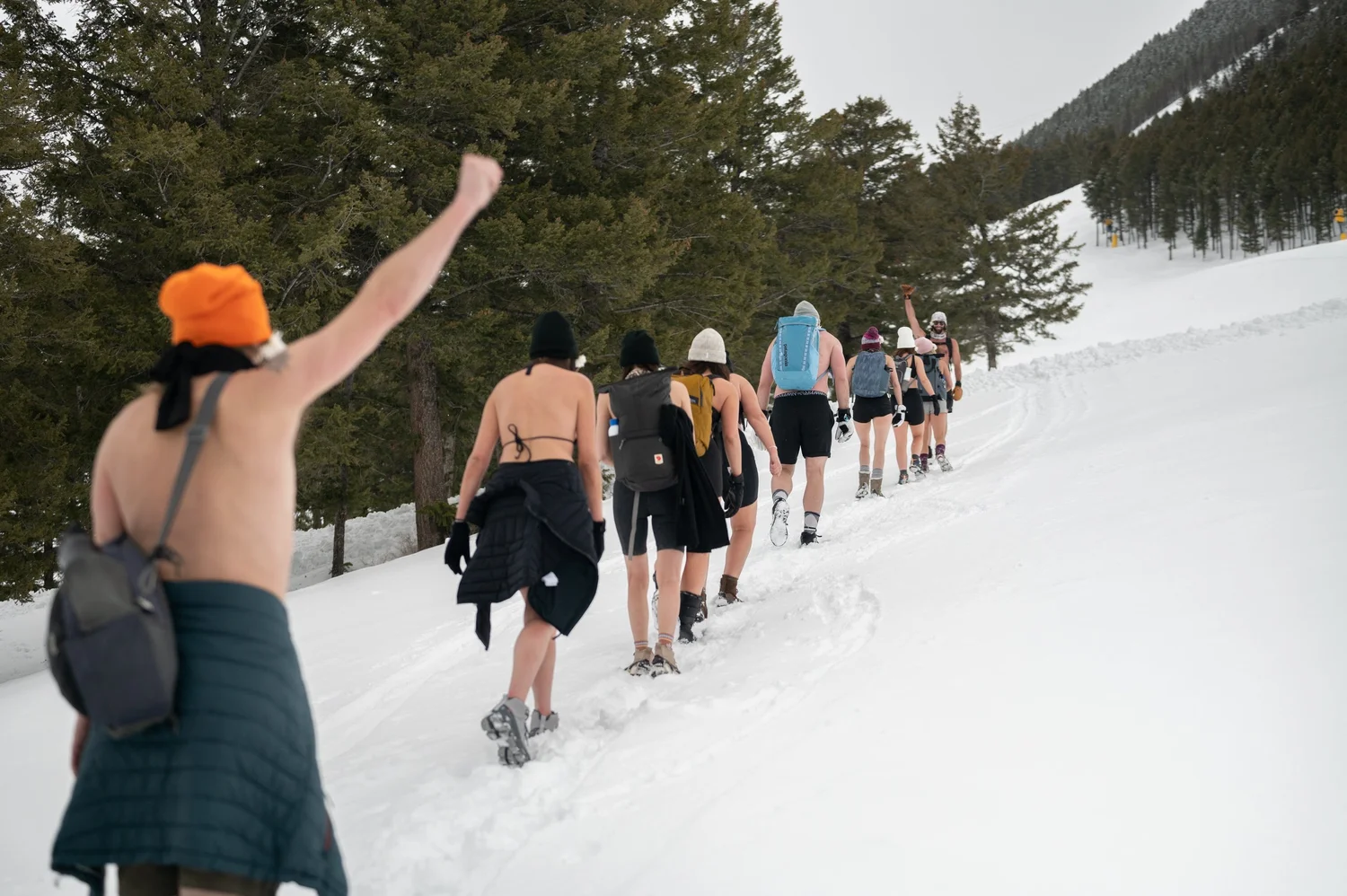
The practice goes deeper together. On retreat in Jackson Hole we breathe, plunge into icy rivers and climb snowy summits as one group, and at Kripalu we practice these fundamentals together in community. A meta-analysis of 148 studies found that people with stronger social relationships had a 50 percent greater likelihood of survival,19 and in a study of nearly 20,000 people, spending at least 120 minutes a week in nature was associated with better health and well being.20
Understanding your nature
Committed practice, discipline, and inquiry are the keys to unlocking the doorways of awareness and understanding. This process is built from an open mind and a curiosity for continuous learning and development. The art of understanding your nature is what shapes the experience of our mind, world and life.

From principles to practice
Interested in learning more?
Seven principles, one practice. Join me at Kripalu or on retreat in nature, or begin today with the free Fundamentals Starter: a 10-minute guided breath session and a 7-day guide.
Coming to Kripalu? See The Fundamentals of Longevity at Kripalu.
Go deeper on two of the seven fundamentals with the breathwork guide and the cold and heat guide, or watch talks and guided sessions in the library.
References
- Ashhad S, Kam K, Del Negro CA, Feldman JL. Breathing rhythm and pattern and their influence on emotion. Annual Review of Neuroscience, 2022. PubMed
- Laborde S, Allen MS, Borges U, et al. Effects of voluntary slow breathing on heart rate and heart rate variability: a systematic review and a meta-analysis. Neuroscience & Biobehavioral Reviews, 2022. PubMed
- Zaccaro A, Piarulli A, Laurino M, et al. How breath-control can change your life: a systematic review on psycho-physiological correlates of slow breathing. Frontiers in Human Neuroscience, 2018. PubMed
- Balban MY, Neri E, Kogon MM, et al. Brief structured respiration practices enhance mood and reduce physiological arousal. Cell Reports Medicine, 2023. PubMed
- Šrámek P, Šimečková M, Janský L, et al. Human physiological responses to immersion into water of different temperatures. European Journal of Applied Physiology, 2000. PubMed
- van der Lans AA, Hoeks J, Brans B, et al. Cold acclimation recruits human brown fat and increases nonshivering thermogenesis. Journal of Clinical Investigation, 2013. PubMed
- Cain T, Brinsley J, Bennett H, et al. Effects of cold-water immersion on health and wellbeing: a systematic review and meta-analysis. PLOS ONE, 2025. PubMed
- Esperland D, de Weerd L, Mercer JB. Health effects of voluntary exposure to cold water: a continuing subject of debate. International Journal of Circumpolar Health, 2022. PubMed
- Laukkanen T, Khan H, Zaccardi F, Laukkanen JA. Association between sauna bathing and fatal cardiovascular and all-cause mortality events. JAMA Internal Medicine, 2015. PubMed
- Laukkanen JA, Laukkanen T, Kunutsor SK. Cardiovascular and other health benefits of sauna bathing: a review of the evidence. Mayo Clinic Proceedings, 2018. PubMed
- Watson NF, Badr MS, Belenky G, et al. Recommended amount of sleep for a healthy adult: a joint consensus statement of the American Academy of Sleep Medicine and Sleep Research Society. Sleep, 2015. PubMed
- Blume C, Garbazza C, Spitschan M. Effects of light on human circadian rhythms, sleep and mood. Somnologie, 2019. PubMed
- Paluch AE, Bajpai S, Bassett DR, et al. Daily steps and all-cause mortality: a meta-analysis of 15 international cohorts. Lancet Public Health, 2022. PubMed
- Momma H, Kawakami R, Honda T, Sawada SS. Muscle-strengthening activities are associated with lower risk and mortality in major non-communicable diseases: a systematic review and meta-analysis of cohort studies. British Journal of Sports Medicine, 2022. PubMed
- Hall KD, Ayuketah A, Brychta R, et al. Ultra-processed diets cause excess calorie intake and weight gain: an inpatient randomized controlled trial of ad libitum food intake. Cell Metabolism, 2019. PubMed
- Dinu M, Pagliai G, Casini A, Sofi F. Mediterranean diet and multiple health outcomes: an umbrella review of meta-analyses of observational studies and randomised trials. European Journal of Clinical Nutrition, 2018. PubMed
- Kox M, van Eijk LT, Zwaag J, et al. Voluntary activation of the sympathetic nervous system and attenuation of the innate immune response in humans. Proceedings of the National Academy of Sciences, 2014. PubMed
- Crum AJ, Salovey P, Achor S. Rethinking stress: the role of mindsets in determining the stress response. Journal of Personality and Social Psychology, 2013. PubMed
- Holt-Lunstad J, Smith TB, Layton JB. Social relationships and mortality risk: a meta-analytic review. PLOS Medicine, 2010. PubMed
- White MP, Alcock I, Grellier J, et al. Spending at least 120 minutes a week in nature is associated with good health and wellbeing. Scientific Reports, 2019. PubMed
Educational content, not medical advice. Talk with your doctor before starting cold, heat, breath or exercise practices, especially if you are pregnant or have a heart condition.