
How to breathe in a cold plunge
The first thirty seconds in cold water decide how the rest goes. Here is the breath I teach every group before they get in, and the one thing I ask everyone never to do.
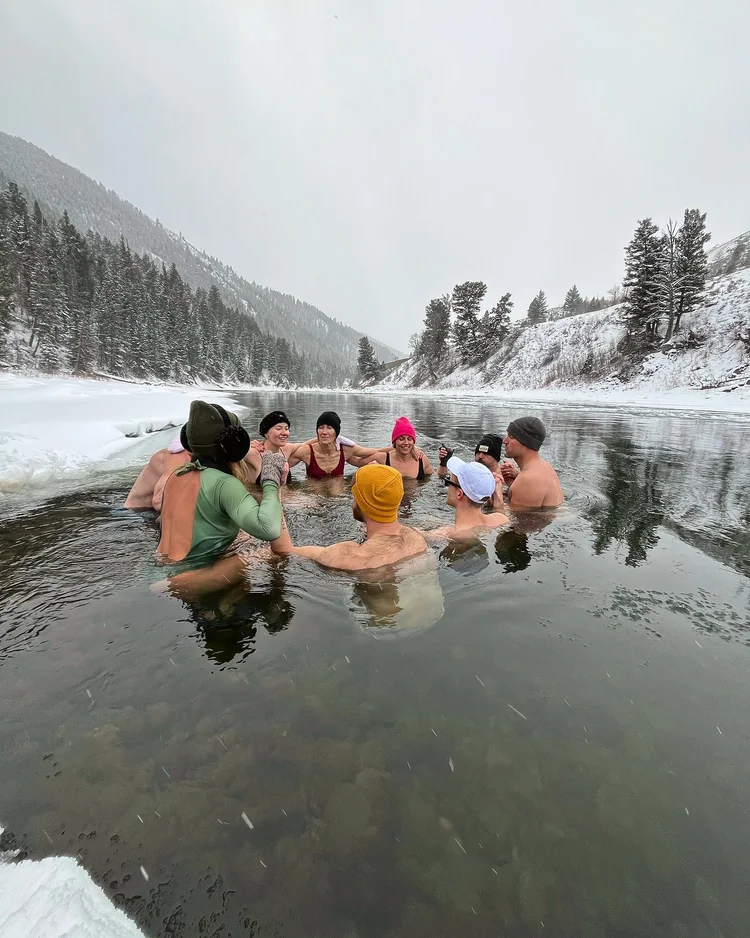
The short answer. Breathe slowly on land first. Exhale as you lower yourself in. For the first minute, make every exhale longer than the inhale. Never hold your breath or hyperventilate in or near the water.
Why the first thirty seconds feel so hard
When cold water hits your skin, your body fires the cold shock response: a gasp, fast breathing and a spike in heart rate. It is automatic and it peaks in the first minute. It is also the main reason cold water is dangerous, because an unplanned gasp underwater can be catastrophic (Tipton 2017).
The encouraging part is that research suggests the cold shock response lessens with repeated, short immersions (Tipton 2017). Your breath is how you shape that adaptation. Every time you meet the gasp with a slow exhale, you rehearse calm under pressure.
Before you get in
- Arrive warm and fed. Not freezing, not starving, never after alcohol.
- Two minutes of slow nasal breathing. In for four, out for six. Let your shoulders drop on every exhale. Slow breathing like this is linked with greater relaxation and parasympathetic activity (Zaccaro 2018).
- Set your exit. Decide your time before you get in and know exactly how you will climb out.
Please practice safely. This is education, not medical advice. Never practice breath holds or breathing exercises in or near water, while driving, or anywhere fainting could hurt you. Cold water carries real risk: never plunge alone, and speak with your doctor first if you are pregnant or have a heart condition, high blood pressure, epilepsy, Raynaud's or any other medical condition.
Getting in: lead with the exhale
Take a comfortable breath in on the edge. Then start a long, slow exhale through pursed lips, as if you were blowing through a straw, and lower yourself in on that exhale. Some people hum or make a quiet "sss" sound, which keeps the exhale long and the jaw soft. Keep your hands out of the water at first if that helps.
The inhale will want to rush in. Let it come through your nose if you can, then go straight back to the long exhale.
The first minute: count the exhale
For the first minute I give people one job. Count your exhale and make it longer than your inhale. In for three, out for six. In for four, out for eight. As the water starts to feel less sharp, let the counts lengthen naturally.
- Soften three places: jaw, shoulders, belly.
- Find one point to look at and keep your eyes there.
- Talk if it helps. If you can speak a calm sentence, your breathing is under control.
Getting out and rewarming
Get out on your planned time, or sooner if you shiver hard, cannot slow your breathing, or feel numb or unwell. Dry off, layer up and move gently. Your core temperature can keep falling for a few minutes after you get out, so stay with a friend until you are warm. I like a warm drink and a few slow walking minutes.
How cold and how long
Begin with 30 seconds to two minutes in water that feels clearly cold but lets you keep slow control of your breath, often around 10 to 15 °C (50 to 59 °F). Build over weeks. Reviews are clear that the health effects of cold water are still debated, so I focus on the skill rather than chasing numbers (Espeland 2022). There is promising early work on mood: one study found a five-minute immersion was followed by higher positive affect (Yankouskaya 2023), and a large trial of cold showers found fewer self-reported sickness absence days (Buijze 2016).
For the full picture of cold, sauna and contrast, read my cold and heat guide. To build the breath first, start with breathwork and the physiological sigh. You can also practice with me in person at Kripalu, where the program includes daily optional group cold-water immersion.
Questions people ask me
Should I do Wim Hof breathing before a cold plunge?
Not in or near the water. Breath holds and fast breathing can cause fainting without warning, and fainting in water can be fatal. If you enjoy the Wim Hof Method breathing, do it separately, seated or lying down on land, and give yourself time before you go near the water. Right before a plunge I use slow nasal breaths with long exhales.
Should I breathe through my nose or mouth in an ice bath?
Whatever lets you exhale slowly. Many people find a long exhale through pursed lips easiest in the first 30 seconds, then settle into breathing in through the nose and out through the mouth or nose. The goal is a slow, controlled exhale, not perfect technique.
Why do I hyperventilate when I get in cold water?
That is the cold shock response, an automatic gasp and fast breathing triggered by cold skin. It peaks in the first minute and research suggests it lessens with repeated, short exposures. Meeting it with a long exhale is the skill.
How long should a beginner stay in a cold plunge?
Start with 30 seconds to two minutes and build gradually over weeks. Get out if you start shivering hard, cannot slow your breathing, or feel numb, confused or unwell.
What should I do after a cold plunge?
Rewarm gently. Dry off, put on layers, move slowly, and have something warm to drink. Your core temperature can keep dropping for a few minutes after you get out, so stay with a friend and avoid very hot showers straight away if you feel lightheaded.
Practice the breath before the water
The free Starter includes a 10-minute guided breathing session you can use before every plunge.
References
- Tipton et al. (2017). Cold water immersion: kill or cure?. Experimental Physiology. doi.org/10.1113/EP086283
- Espeland et al. (2022). Health effects of voluntary exposure to cold water: a continuing subject of debate. International Journal of Circumpolar Health. doi.org/10.1080/22423982.2022.2111789
- Yankouskaya et al. (2023). Short-Term Head-Out Whole-Body Cold-Water Immersion Facilitates Positive Affect and Increases Interaction between Large-Scale Brain Networks. Biology. doi.org/10.3390/biology12020211
- Buijze et al. (2016). The Effect of Cold Showering on Health and Work: A Randomized Controlled Trial. PLOS ONE. doi.org/10.1371/journal.pone.0161749
- Zaccaro et al. (2018). How Breath-Control Can Change Your Life: A Systematic Review on Psycho-Physiological Correlates of Slow Breathing. Frontiers in Human Neuroscience. doi.org/10.3389/fnhum.2018.00353

The Practice
Make it daily.
Guided breath, cold and deep rest sessions in your podcast app, with a new one every month. Nine sessions to start, from a 6-minute reset to a 56-minute journey.
Practice breathwork seated or lying down, never in or near water or while driving.